
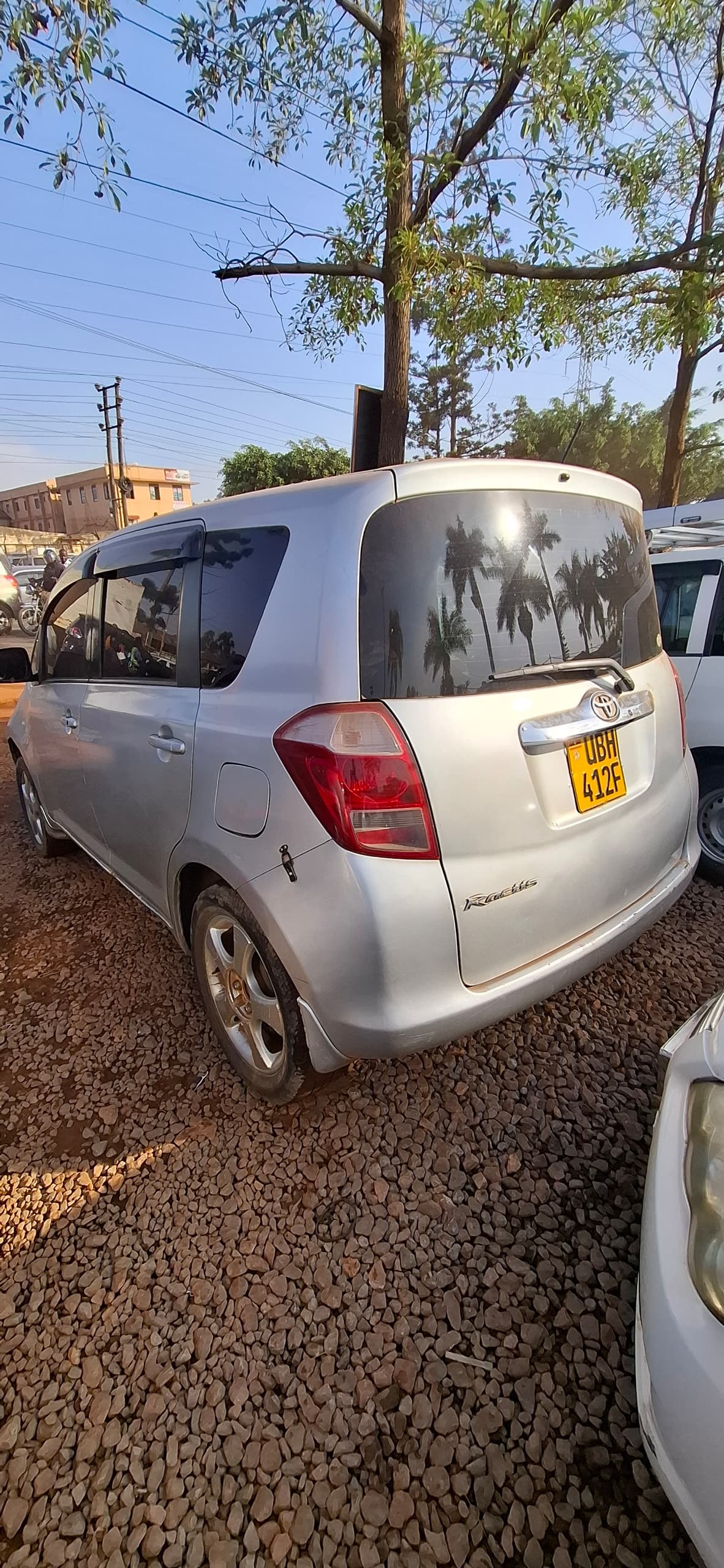
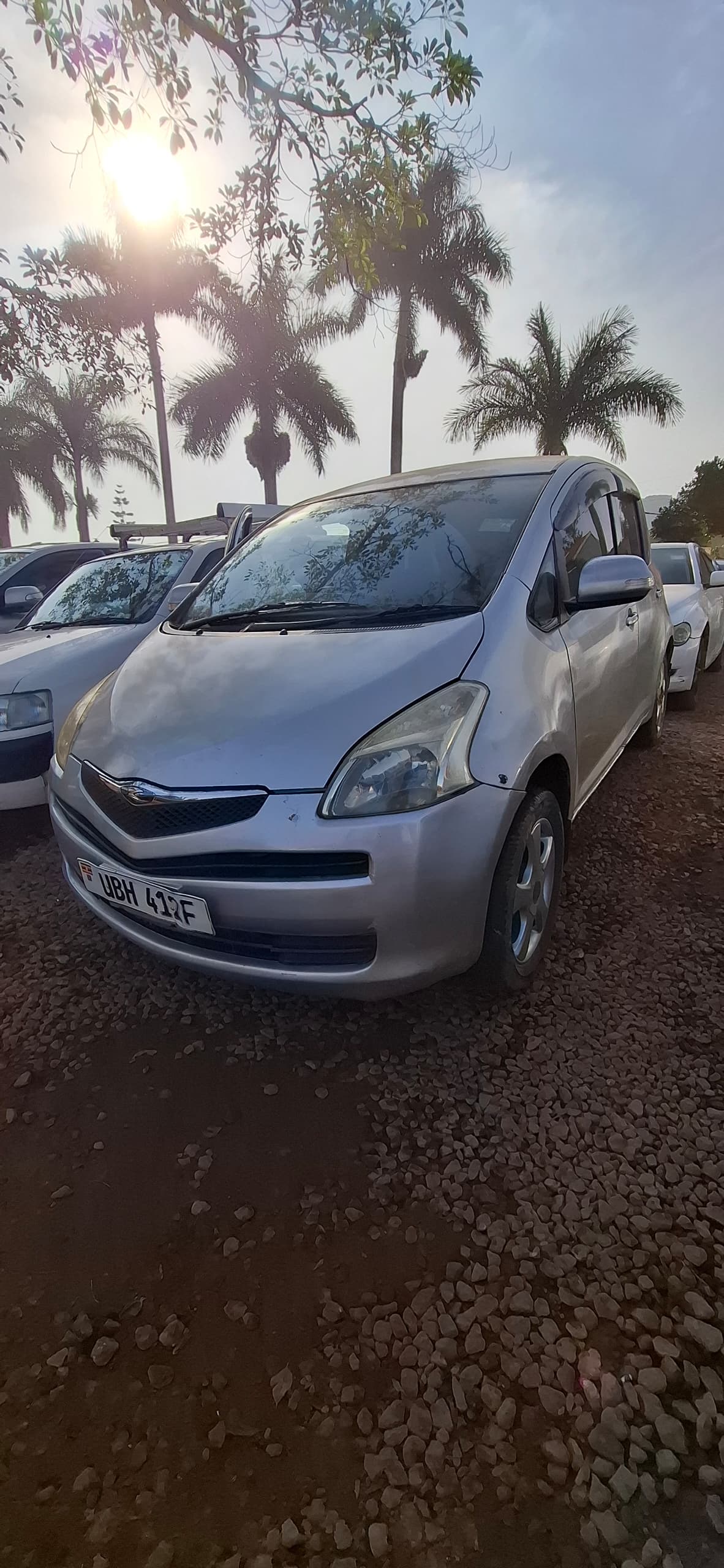


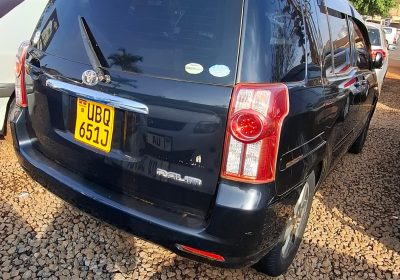
The Ractis is a compact 5-door minivan / small MPV / hatchback-minivan — a practical small family car rather than a large sedan or SUV.
It typically seats 5 persons.
Its compact dimensions and versatile interior make it suitable for city driving, small families, or light cargo/passenger use.
📏 Dimensions & Size (for typical 2006 Ractis)
Depending on the version, approximate external dimensions are:
Spec Typical Value
Length ~ 3,995 mm (≈ 4.0 m)
Width ~ 1,695 mm
Height ~ 1,640–1,660 mm (varies by spec / 2WD vs AWD)
Wheelbase ~ 2,550 mm
Doors / Seats 5 doors, 5 seats
Because of these dimensions, Ractis is more compact than a typical sedan — making it easier to manoeuvre and park in tight city spaces, yet still offering more flexibility than a small hatchback.
🔧 Engine / Model Variants (for 2006 Ractis)
For 2006 (and surrounding years) Ractis had a few engine/trim variants. Main ones:
1.3 litre (≈ 1296 cc) 4-cylinder inline — often badged as “1.3i (87 hp)” version.
Output: ~ 87 hp at 6000 rpm, torque ~ 121 Nm at 4200 rpm.
Drive layout: Front-wheel drive.
Fuel consumption (extra-urban / economy conditions): about 5.5 L / 100 km.
1.5 litre (≈ 1496 cc) 4-cylinder inline, engine code 1NZ-FE — “1.5i / 1.5” versions, often more common especially if you need more power / load capacity.
Power: ~ 110 hp (or slightly less depending on version), torque ~ 141 Nm @ ~4400 rpm.
Transmission / drive: Many are front-wheel drive (FWD) with CVT or automatic; there are also some 4WD/automatic (4AT) variants for markets where this was offered.
⛽ Fuel Consumption & Efficiency (Realistic Expectations)
For the 1.3 L version — fuel economy is good: ~ 5.5 L/100 km (combined/extra-urban) under ideal conditions.
For the 1.5 L version (1NZ-FE) — real consumption will depend on driving style, load, and road conditions; engine is modest, so still fairly efficient compared with larger cars; expect reasonable fuel economy, though higher than the 1.3 L variant. Official spec for some 1.5-L 4WD/auto says ~ 6.8 L/100 km under “test” mode.
Because Ractis is light and compact (compared to large sedans or SUVs), it tends to be more fuel-efficient — an advantage especially in cities or for everyday commuting.
✅ What Makes Ractis a Good Choice (and What to Check)
Advantages:
Compact size + versatile body: easy to drive/park in city, while having flexibility for 5 people.
Fuel-efficient (especially with 1.3 L) — good for daily driving or as a budget-conscious choice.
Simpler mechanicals (small 4-cyl engine, modest size) — lower maintenance and easier to run compared to big cars.
Practical for small families, small-cargo, or light commuting needs; less risky on fuel costs.
Considerations / What to Check (especially if importing / buying used):
1.3 L may feel underpowered if you often carry lots of passengers/cargo or drive on steep/rough roads.
1.5 L gives more “pep” but fuel consumption will go up, especially under heavy load or in stop-go city traffic.
As with any used/imported car: check maintenance history, condition of suspension / tyres / transmission — especially if from a market with 4WD or demanding conditions.
If driving in rougher or unpaved roads (as can be common in Uganda / East Africa), the small car may be less comfortable than a high-clearance SUV — consider suspension and ground clearance carefully
Overview
Seller Information

Location
Related Ads
Leave feedback about this
You must be logged in to post a review.